

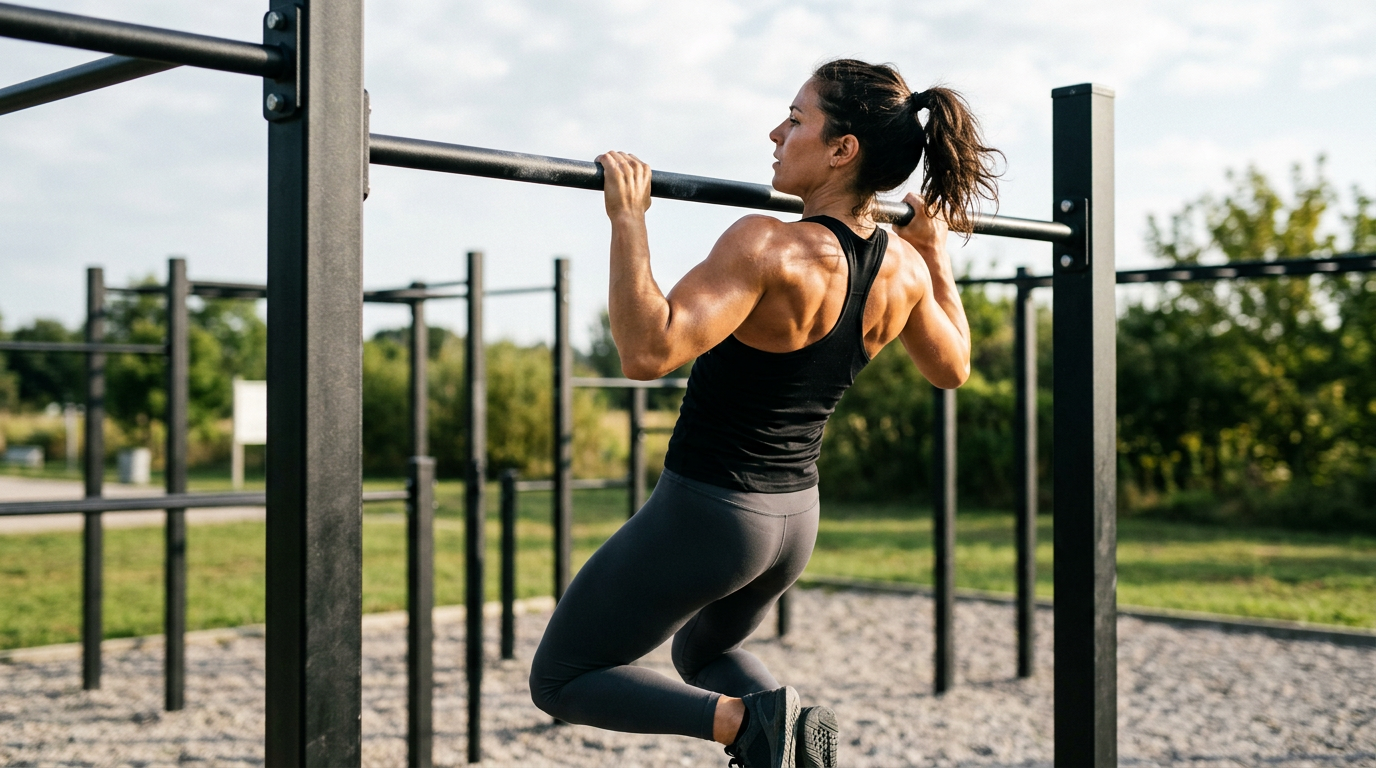
"How do I get my first pull-up?" is one of the most common questions beginners ask when they start calisthenics — and the good news is that a strict pull-up is a skill you can train for, not a talent you're born with. Almost anyone can earn one with the right progression and a bit of patience. Here's exactly how to do it.
Why the pull-up feels impossible at first
A pull-up asks you to lift your entire bodyweight using your back, arms and grip. If you've never trained these muscles directly, they simply aren't strong enough yet. The fix isn't to keep failing at full pull-ups — it's to build the strength through easier movements that gradually close the gap.
The beginner pull-up progression
Follow this path in order. Move to the next step only once the current one feels controlled and comfortable.
1. Dead hangs (build grip & shoulder strength)

Grab the bar with an overhand grip and hang with arms fully extended. Keep your shoulders active rather than fully slumped. Aim to build up to a 30-second hold. This teaches your hands, forearms and shoulders to support your bodyweight.
2. Scapular pulls (learn to engage your back)
From a dead hang, without bending your elbows, pull your shoulder blades down and together so your body rises slightly, then relax. This small movement teaches the scapular control that every pull-up depends on. Aim for 3 sets of 8–10.
3. Inverted rows (horizontal pulling strength)
Set a bar at hip height, hang underneath with a straight body, and pull your chest to the bar. Start with bent knees to make it easier, then progress to straight legs and eventually elevated feet. Rowing builds the exact back muscles a pull-up needs, so give it at least as much volume as your vertical pulling.
4. Band-assisted pull-ups (the game-changer)
Loop a resistance band over the bar and place a foot or knee in it. The band supports part of your weight at the bottom of the rep — where it's hardest — so you can practise the full range with good form. Start with a thicker band that lets you complete at least 5 clean reps, then work down to thinner bands as you get stronger. This is the single fastest way most beginners bridge the gap to an unassisted pull-up.

Our Coast Cali Resistance Band Set is built exactly for this — a range of resistance levels so you can start with more assistance and step down band by band until you're pulling your full bodyweight. It's the tool we recommend to almost every beginner chasing their first pull-up.
5. Negative pull-ups (build strength fast)
Jump or step to the top position with your chin over the bar, then lower yourself as slowly as possible — aim for a 5-second descent or longer. This eccentric training is one of the most effective ways to build pulling strength and is often the final step before a full rep.
How often should you train?
Train pulling 2–3 times per week with a rest day in between. Strength is built during recovery, so consistency over weeks beats hammering the bar every day. Most beginners who train consistently earn their first pull-up within 4–12 weeks.
Quick tips to get there faster
Keep your core tight and avoid swinging or kipping — a strict pull-up is the goal. Lead with your chest, drive your elbows down toward your hips, and get your chin fully over the bar on every rep. Finally, be patient with grip strength; it's often the hidden limiter, which is why dead hangs matter so much.
The bottom line
Your first pull-up is a matter of when, not if. Work through dead hangs, scapular pulls, rows, band-assisted reps and negatives, train consistently a few times a week, and use a resistance band to bridge the gap. Stick with it and that first clean rep is closer than you think.